Vinylene Carbonate (VC) is a type of Battery electrolyte additives that improve the performance and energy of lithium-ion batteries. VC acts as a significant electrolyte additive intended to create a uniform SEI layer on the anode side and reduces the likelihood of side reactions of the battery. Also, it is compatible with controlling capacity loss and depletion of a battery.Vinylene Carbonate is a vital element in cells' ability to work efficiently and reliably in various voltages and fast-charging systems.

As the need for energy storage solutions to power applications such as EVs, ESS, and consumer electronics rises, so too has the demand for more advanced additives such as VC. Improving cycle life, thermal stability, and capacity retention, VC provides batteries with the required level of performance and safety during the entire duration of operation. This allows it to be a great option when manufacturers desire to maximize battery performance and safety against fast-changing energy storage systems.
Vinylene Carbonate (VC) Manufacturer

Chemical Specifications of Vinylene Carbonate

Property Details
CAS Number 872-36-6
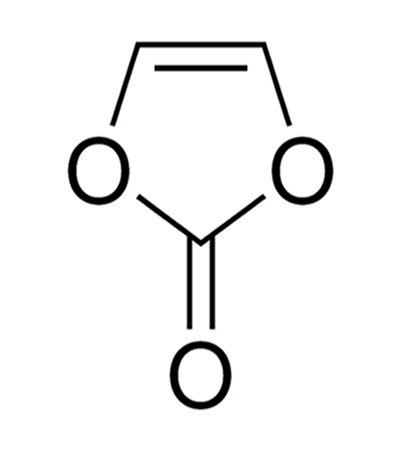
Molecular Formula C₃H₂O₃
Molecular Weight 86.05 g/mol
Appearance Colorless to pale yellow liquid
Purity ≥99.9% (Battery Grade)
Moisture Content ≤50 ppm
Boiling Point ~162°C
Density ~1.34 g/cm³ at 20°C
Refractive Index 1.452 – 1.456
Storage Conditions Store in dry, cool place under inert gas
Packaging Options 500g, 1kg (Aluminum Bottle); 5kg, 25kg (HDPE Drum)

Key Benefits and Features

  • Enhances formation of a stable SEI layer
  • Increases cycle life and thermal stability
  • Reduces gas formation and capacity fading
  • Effective under high-voltage and fast-charge conditions
  • High purity and moisture control for consistent performance
  • Compatible with various electrolyte blends

Industries We Serve

Vinylene Carbonate

Electric Vehicles (EVs)

Vinylene Carbonate for consumer electronics

Consumer Electronics

Vinylene Carbonate in ESS

Energy Storage Systems (ESS)

Vinylene Carbonate in battery R&D

Battery R&D & Prototyping

Frequently Asked Questions (FAQ)

Why is Vinylene Carbonate (VC) added to lithium-ion battery electrolytes?

VC is one of the most effective film-forming additives. It polymerizes on the anode surface during the first charge, creating a stable, thin Solid Electrolyte Interphase (SEI) layer that prevents electrolyte decomposition.

How does VC improve battery stability at high temperatures?

The polymeric SEI layer formed by VC is highly stable and prevents side reactions even at elevated temperatures, controlling capacity fading and suppressing gas generation.

What is the CAS number and appearance of Vinylene Carbonate?

The CAS number is 872-36-6. It is a colorless to slightly yellow liquid at room temperature (its melting point is around 20-22°C).

What purity is required for battery-grade Vinylene Carbonate?

Battery-grade VC requires an extremely high purity of ≥99.9% and moisture content strictly below 50 ppm to ensure optimal battery performance.

What happens if there is high moisture in Vinylene Carbonate?

High moisture causes VC to hydrolyze, producing impurities that can severely degrade the electrochemical performance and cycle life of lithium-ion cells.

Request A Quote